Cosmology
Redshift, dark matter, and the large-scale geometry of the universe derived from quaternion algebra
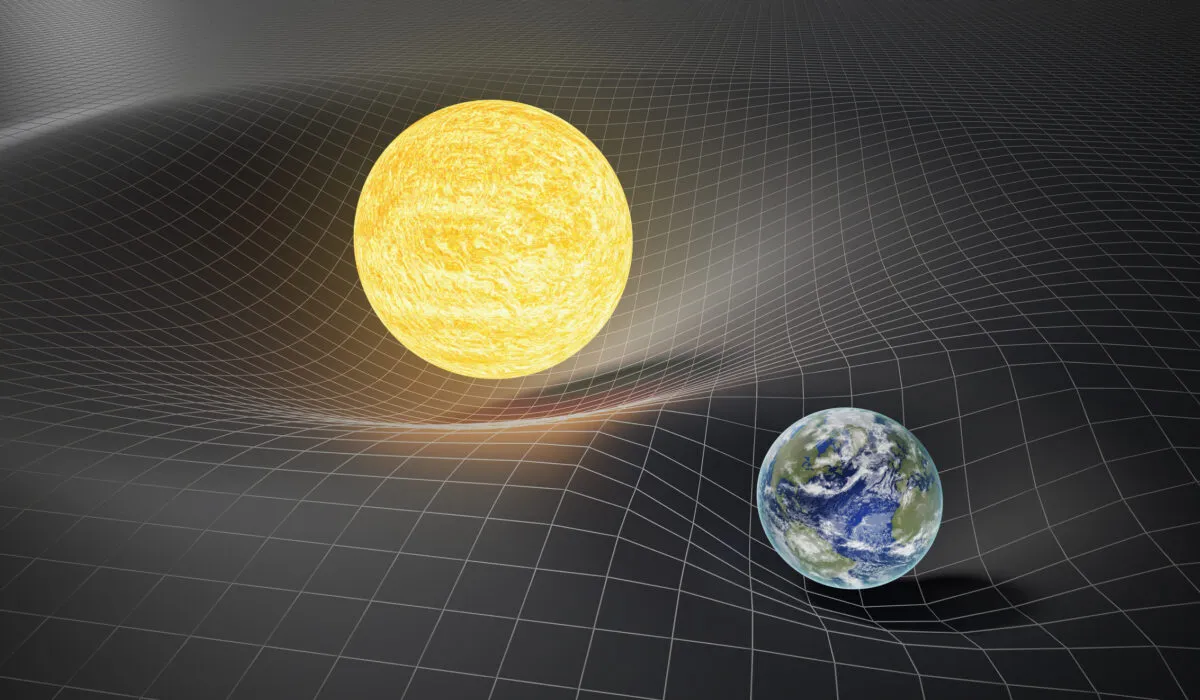
PAPER I · 2026
Spacetime Expressed Through a Complex Quaternion
Special Relativity, General Relativity, and the Geometry of the Cosmos from Hamilton’s Algebra
Writing the time coordinate as W = iτ on the real axis of Hamilton’s Quaternion, the Lorentzian spacetime interval emerges as the norm — without postulate. Special Relativity, General Relativity, and the geometry of the cosmos from one algebra.
PAPER II · APRIL 2026
Cosmological Redshift as Gravitational Metric Contraction
An Exponential Infall Model with Quaternion Geometry
A cosmological model in which the observed redshift of distant galaxies arises not from the expansion of space, but from the progressive contraction of the spacetime metric under gravitational infall. One equation. No dark energy. No beginning of time.

PAPER III · 2026
The Quaternion Screw: Galaxy Rotation, Spiral Arms, and the Origin of Dark Matter
A Geometric Derivation Without Dark Matter Particles
Spiral galaxy rotation curves, bar formation, and the missing mass problem resolved by a single quaternion screw motion. No dark matter particles — the geometry of Hamilton’s algebra produces the observed dynamics.
PAPER IV · COMING SOON